
In the packaging industry, produce bags are commonly used for various food items, and ensuring that these bags meet required strength and durability standards is vital. The tensile strength test is one of the essential methods to assess the strength and resistance of materials like produce bags. This test helps determine the force required to break or stretch the bag material, providing valuable data on the bag’s performance. The ASTM D882 standard is widely used for conducting tensile strength tests, and understanding the process can help manufacturers produce bags that meet quality and durability expectations.
Understanding ASTM D882 and Tensile Strength Test
The tensile strength test under ASTM D882 involves testing the mechanical properties of flexible plastic films, including produce bags. This standard describes the method for determining the tensile properties of thin plastic sheeting, providing critical information about their strength, elongation, and modulus. The test is performed by applying a tensile force to a specimen, measuring the force required to elongate and eventually break the material.
The ASTM D882 test is applicable to materials such as produce bags, and it helps manufacturers assess their quality and durability before use in packaging. The test data gathered can be used to ensure that the bags can withstand the stress and strain they encounter during handling, transportation, and storage.
Significance of Tensile Strength in Produce Bags
The tensile strength test plays a critical role in determining the performance of produce bags in real-world conditions. Key aspects that are assessed include:
- Tensile Stress: The amount of force required to stretch the material before it breaks.
- Wydłużenie: The degree to which the material stretches before failure occurs.
- Tensile Modulus: A measure of the stiffness of the material.
The test results help manufacturers determine the most suitable materials for producing produce bags that can resist tearing and maintain their integrity during handling. It also allows them to optimize the design and production process for the best performance under stress.
Conducting the Tensile Strength Test: Methods and Equipment
The tensile strength test is carried out using specialized equipment, typically a mechanical testing machine, which applies a tensile force to the specimen while measuring the force and extension during the test. The key components of the test include:
- Specimen Preparation: The produce bag is prepared by cutting a standardized sample, ensuring it has the appropriate dimensions and material thickness.
- Gripping and Extension Measurement: The specimen is clamped into the testing machine, and the machine pulls the specimen apart at a controlled speed.
- Force and Elongation Measurement: During the test, the applied force and elongation of the sample are recorded. The point at which the material fails is noted, and the tensile properties are calculated.
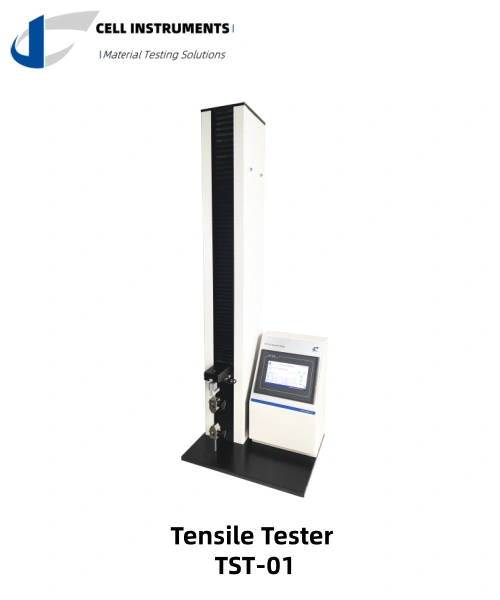
The Cell Instruments Tensile Tester TST-01 is an excellent option for conducting this test, providing precise control and accurate results.
Key Factors Influencing Tensile Properties
The tensile properties of produce bags can vary depending on several factors:
- Material Composition: Different types of plastic films and their blend ratios affect the tensile strength and elongation characteristics.
- Thickness of the Material: Thicker films generally exhibit higher tensile strength.
- Speed of Testing: The test speed can influence the results, and it is important to maintain consistency when comparing different materials.
- Type of Grips Used: The design and condition of the grips can affect the reliability of the test results.
By considering these factors, manufacturers can ensure they are using the optimal materials and processes to create produce bags that meet required strength standards.
Why the Tensile Strength Test Matters for Produce Bags
Conducting a tensile strength test is essential for ensuring that produce bags can withstand various stress factors such as stretching, tearing, and pressure during their use. The ASTM D882 standard provides an established method for evaluating these properties, ensuring that produce bags can protect their contents and maintain their functionality.
Moreover, the data derived from these tests is invaluable for quality control and specification purposes. It helps manufacturers optimize their production processes, improve material selection, and ensure that the bags meet industry standards for strength and durability.
Conclusion: Optimizing Produce Bags with Accurate Testing
The tensile strength test is a crucial part of ensuring that produce bags are capable of handling the physical demands of their application. By adhering to the ASTM D882 standard and utilizing precise testing equipment like the Cell Instruments Tensile Tester TST-01, manufacturers can produce high-quality bags that meet durability standards.
This ensures that produce bags provide the necessary strength, elongation, and resistance to tearing, making them reliable for various food packaging applications.
 PL
PL  EN
EN  AR
AR  BG
BG  CS
CS  DA
DA  DE
DE  EL
EL  ES
ES  ET
ET  FI
FI  FR
FR  HU
HU  ID
ID  IT
IT  JA
JA  KO
KO  LT
LT  LV
LV  NB
NB  NL
NL  PT
PT  RO
RO  RU
RU  SK
SK  SL
SL  SV
SV  TR
TR  UK
UK